Hello, I created this blog because Melbourne is my city and I want people to see what a beautiful place it is. So come with me on a journey of discovery as we traverse the dining precincts, the culture, the laneways and hidden gems that make Melbourne marvellous.
Dancing at the fair
We went to a local fair in October and there were Morris dancers performing. I really love watching them - listening to the bells on the men's legs and all the handkerchief waving and the music. It's a real fun day and it's sort of like stepping back in time to the olden days. Quite a number of teams have fancy hats with lots and lots of flowers on them. The hats with the flowers are worn by the men. I saw several Morris dancing teams at a folk festival a couple of years ago, took heaps of photos and found I'd accidently deleted them. I was so disappointed. The men's hats were lovely.
Above:Let me drop everything and dance on your problem!
This is the motto of the Brittania Morris Men.
The history of Morris Dancing
Morris dancing has been around for a long, long time - much longer than you or I. Our great grandparents weren't even a twinkle in their parents eye. Go back to Shakespearian times - Shakespeare mentions Morris dancing in "All's Well that Ends Well", and makes it clear that the Morris dance was commonly performed on May Day (May 1).
It is believed that dancing formed part of the celebration of Celtic festivals, but somewhere in the mist of time, the origins of Morris dancing have become lost and today survives as a form of folk dance performed in the open air in villages in rural England by groups of specially chosen and trained men and women. Rather than being a social dance, it's more ritualistic. The dancers take their dances seriously and feel the dances have a magic power which serves to bring luck and ward of evil.
Above:Traditional set
The dancers here performed in the Cotswold style. The chap at the front left of the set is the Caller - the person who calls out the figures of the dance.
I videoed part of the dancing. The first is a Handkerchief dance, followed by one of the stick dances - the dancers have long sticks about a metre in length and tap the ground and cross sticks. Different dance teams have different versions and no two are exactly the same. Today's quote is the motto of the Tarka Morris Men of Bideford, England
Every year from mid September to mid October Tesselaar's Tulip Festival is held. There are over 100 different types in all sizes and colours.
Above:Tulip Time
Tesselaar's Tulip Farm is in Silvan, in the beautiful Dandenong Ranges about an hour's drive from Melbourne.
Did you know
Tulip images are found as far back as the 12th century where they were used to decorate a Bible. The three petal image of the tulip was and still is used as a symbol of the Holy Trinity.
Above:Windmill
There is more than just tulips to see, although the flowers are the main focus. Various windmills are to be found.
Above:A shady spot
This chap looked like he had had enough.
Above:Tip-toe through the tulips
Everyone likes to walk among the tulips.
Tulipomania
Tulipomania began in the Netherlands and the tulip became a status symbol for the rich. The gamble of creating a new colour break was an exciting game to play. Much experimentation was done trying to get the best effects. Wall plaster and powdered paints were mixed into the soil. Bulbs of various colour were spliced and joined together. Rare colours and streaks were also created - later with the discovery of the microscope these variations were revealed to be caused by a virus.
During tulipomania exorbitant amounts of money were spent on the frenzied purchasing of bulbs - houses were mortgaged and people joined syndicates to try the bulbs. Tulips were literally worth their weight in gold. A single bulb like 'Sempus Augustus' was worth more than a house in Amsterdam's best district.
Above:Tulips as far as the eye can see
The first famous tulips in the Netherlands were planted by Carolus Clusias, the curator of Leiden's botanical gardens. He was approached to sell them, but refused. Later they were stolen from his garden. It was these stolen bulbs that created the stock for the booming tulip trade throughout the Netherlands. The Dutch named their tulips after Admirals and Generals in the spirit of the times.
Nurseries were established in the 17th century and as the stocks grew so did the market. The new colour breaks were the most popular and helped maintain the aura and mystery of the tulip.
Above:Tulip Fantasy
It was cheaper to have a tulip painted by the masters of the time than it was to purchase a single bulb. Master painters were commissioned to paint a momento of the tulips grown, these became treasured possessions.
Bulb farms were worked by hand, fields were tilled, drainage trench ditches dug, bulbs planted and dead headed after flowering. The work was labour intensive.
Did you know
The tulip motif has been used extensively in art, as crystal etchings and the shape has been a feature in gold and silver work.
Above:Stall holders
Most all of the stall holders and people working here were dressed in Dutch costumes. There are twelve provinces in the Netherlands and "traditional" Dutch clothing is therefore different in each area.
Above:Traditional costumes
The young lad was working at the bulb buying marquee and was quite happy to pose. The centre couple are members of the Folk Dancers and the lady on the right I just happened to see walking around.
Above:Windmill girl
Another windmill. After this I had lunch. The cafe provided light foods etc., but I wanted Dutch food, so went to the stalls on the other side and had Frikandellen and Reifkoek. Frikandellen are Dutch sausages - like a minced-meat hot dog and Reifkoek are potato cakes. The potato is grated and mixed with onion then fried - very greasy and very fattening! Later in the day I indulged in one of my favourites - Poffertjes. Dutch pancakes. Miniature pancakes - you get 19 of them and I went for jam and cream. Lashings of creams, smothered in icing sugar. Mmmm....heavenly.
Above:Folk Dancers
While eating my lunch, just as I was finishing, I heard an announcement that there was to be Dutch folk dancing in the centre bit near the souvenir shop. Wasting no time, I walked there - there was a very large circle of chairs placed around, and I espied two empty chairs. Needless to say, I made my way quick smart to the appropriate empty chair(s) and sat down on one. Lucky for me that I did - soon there were many, many people standing in rows behind.
Below is a video I took with my camera. I didn't capture all of it and alas stopped in mid-air so to speak - before a dance ended. (I wasn't sure how long the battery would last, plus my arms were tired from holding them up to film)
Above:Melbourne Tukkers
The group is called the Melbourne Tukkers and I thouroughly enjoyed watching and listening to the music.
I found my toe a-tapping for most of the performance.
Above:Dutch Beauties
These lovely ladies were part of the folk group - as you can see they are all smiling and happy.
Above:Under the willow
After lining up for about 45 minutes to buy poffertjes, I saw this lovely old willow and was quite taken with the serenity of the scene.
The last Sunday in August is the annual Wattle Festival and I went with two gentlemen - Master Five and Master Four to witness the glorious wattle that abounds in the lovely town of Hurstbridge. It is a fun family day with free horse, bus and train rides. Driving through Diamond Creek and along Heidelberg Kinglake Rd is one of my favourtie drives with the sound of birdsong and the fresh smell of trees and flowers playing imaginitive dreams with your senses.
Horse and Buggy
The horse and coach rides must be the most popular because the biggest queue was here. The boys loved riding on the carriage.
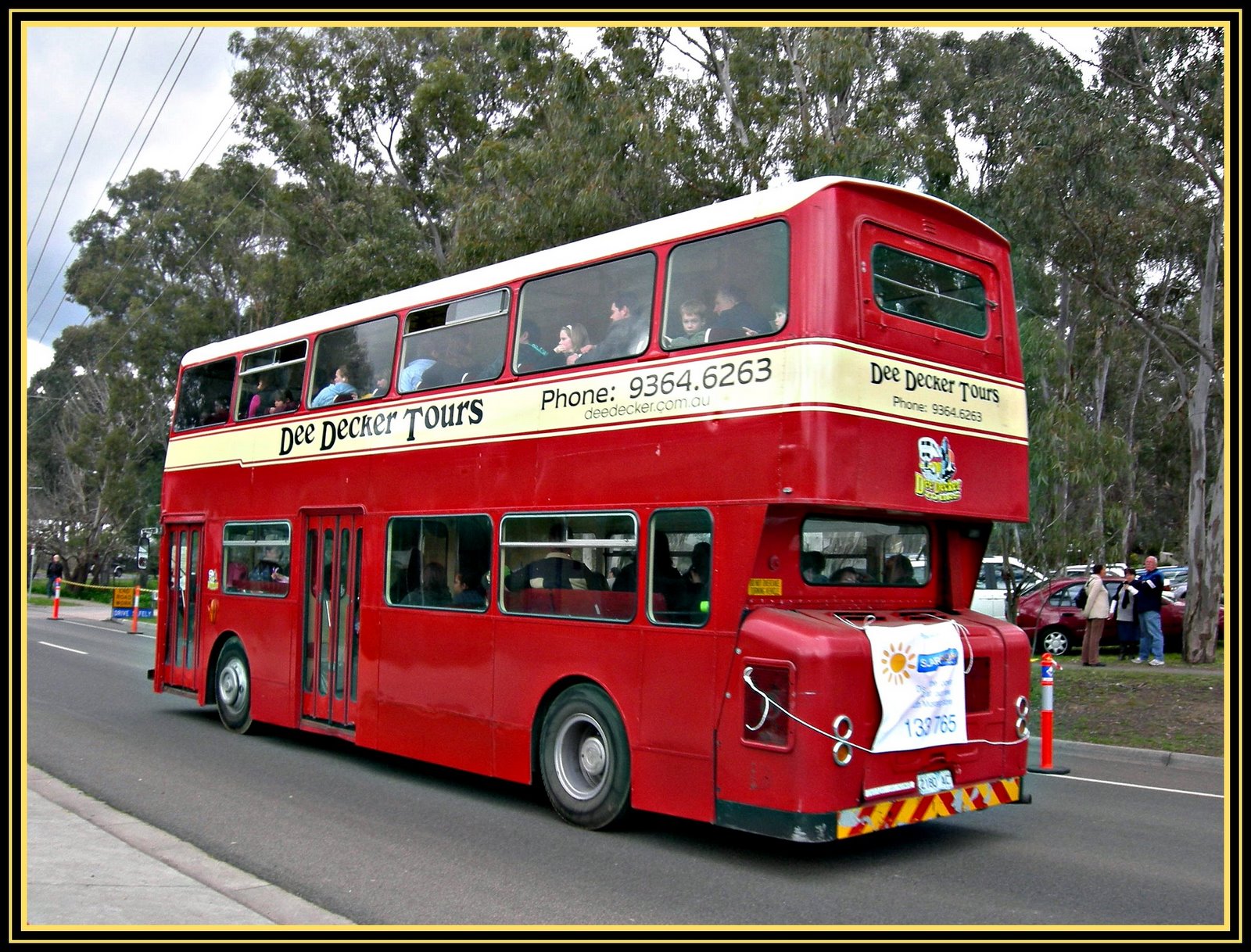
Double Decker Bus Rides
The double decker bus was the second favourite and after we had waited patiently, it was our turn but they wanted to ride "on the top" so we waited for the next one. Everyone wants to ride on the top!
Tongan Dancers
The Tongan dancers were wonderful and we sat entranced listening to Tongan music and watched various traditional dances. The ladies were a little cold in the strapless Tapa.
The Hupmobile
A display of vintage cars saw many people having a good look. Here we see Master Five and Master Four sitting in one of them. There were many more things to see and do, but alas we ran out of time. You can read more about them here.
The Wattle Girls
These lovely girls willingly posed for me - aren't they pretty in their wattle clothes?
Miss Wattle 2010
Here we see Miss Wattle 2010 graciously posing before hitching a ride with the horses. She was dressed in a lovely ballgown of green and yellow and sprigged with wattle. She said ballgowns and horses don't go well together and gave us a demonstration of how to fix this problem by tucking her gown into her purple satin bloomers!
Wattle
And of course - the wattle. Did you know there are over 600 different species throughout Australia? One species of wattle, Acacia pycnantha, is the floral emblem of Australia and is featured on our coat-of-arms.
Today's Quote: You are invited to the festival of this world and your life is blessed ~ Rabindranath Tagore
Hello, I created this blog because Melbourne is my city and I want people to see what a beautiful place it is. So come with me on a journey of discovery as we traverse the dining precincts, the culture, the laneways and hidden gems that make Melbourne marvellous.